Wednesday, June 14, 2017

Never too early to consult for chest pain, always too late to consult for total pain

Palliative care is the diagnosis, prevention, and treatment of suffering—the physical, psychological, social, and spiritual components of disease burden that diminish quality of life. Many patients require only primary and not specialist palliative care, just as many patients with cardiovascular disease risk are managed without a cardiologist. A patient presenting with chest pain may still initially be managed by emergency medicine physicians and these days hospitalists, who will use morphine, oxygen, nitrates and possibly aspirin to palliate the symptoms of chest pain while investigating the etiology of the pain. Those patients that are "ruled-in” for coronary artery disease are referred to a cardiologist for definitive management. Those with unstable angina, non-ST elevation, and ST elevation myocardial infarction will usually be seen by an interventional cardiologist and a subset of those will see a cardiothoracic surgeon. Suffering is much the same, everyone deserves good primary palliative care, some will need specialty palliative care, and still others will take advantage of hospice services depending on the severity of their disease, treatment options, and healthcare goals.

Everyone has some level of cardiovascular disease risk, from minimal to extremely high risk. Similarly nearly all people bear some burden of suffering, for many this burden is minimal in duration and volume, but for others the burden of suffering exceeds their ability to lead a life with an acceptable quality of life. For these patients, palliative care becomes a prerequisite of good care. It has been recommended that palliative care be initiated at diagnosis of serious or life-threatening disease. Unlike cardiovascular disease, where we fear late consultation more than earlier, providers are more fearful of getting palliative care involved “too early” and accept that their patients' suffering is par for the course until very late in the course of their disease. Preventing suffering, like preventing any disease, is the only way to cure it with nearly 100% success and is likely more cost effective. 

Palliative care can always be a support

One of the reasons that palliative care is also called supportive care is because palliative care acts as the scaffolding while curative therapy is undertaken and if it should this fail continues to support the patient to a death with comfort, dignity, and peace. Palliative care uses a multidisciplinary approach to strengthen the pillars of chronic suffering while simultaneously supporting patients through acute insults as their disease and treatment of their disease takes a toll on their overall wellbeing.

Without support

Patients present because of symptoms, looking for relief and answers. While we seek to diagnose, everyone deserves symptom relief. While we treat we must acknowledge that our patients will not instantly feel improved and may sometimes have a period of recovery where they feel worse than they did before we started “helping”. These patients also deserve symptom relief. Acknowledging that healthcare is the discoverer of the source of suffering and sometimes the cause of it does not make us less of a provider but simply more human. Patients that feel better, know more, and plan ahead, unsurprisingly do better. Benjamin Franklin said it best, "In this world nothing can be said to be certain, except death and taxes.” He never said we had to suffer from either.

Thursday, March 24, 2016

Suffering As A Screening Criteria For Palliative Care Referral

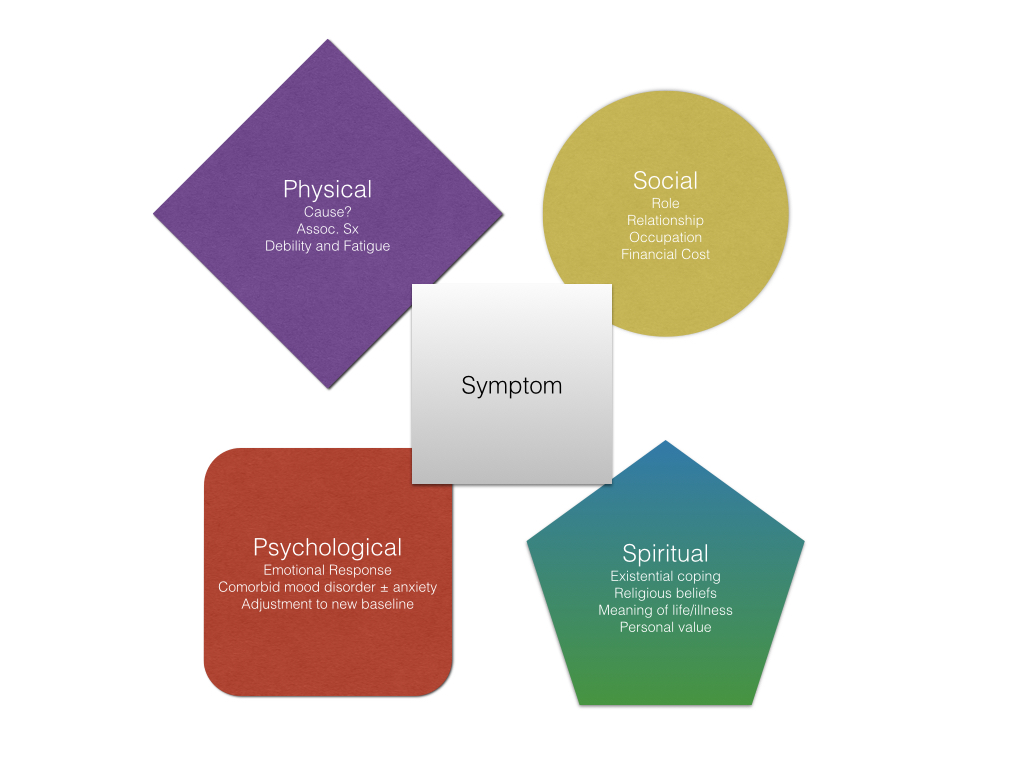
The total pain1 and total dyspnea2 models can be expanded into a model of the multidimensional suffering of patients experiencing serious or life-threatening illness3. These models describe symptom burden in terms of associated physical symptoms and loss of functioning; psychological impact and its effect on emotion, coping, or adjustment; social impacts on identity, role, and relationships; and spiritual impact on coping, existential distress and meaning.

Total symptom model 001

This suffering model has the potential of being a screening criteria for referral to specialist palliative care based on suffering rather than disease state. A hypothetical paradigm to empower patient self-referral might be:

  • Does your disease or its symptoms feel intolerable or make you feel debilitated, weak, or fatigued to an unbearable extent?
  • Does your disease or its symptoms cause you to feel sadness, fear, or anger to such an extent that it impairs your functioning?
  • Does your disease or its symptoms cause you to question your personal, professional or familial identity or role?
  • Does your disease or its symptoms cause you to question your beliefs or cause your beliefs to be unsupportive?
If you answered yes to any of the above questions, would you like to see a team that deals exclusively with diagnosing, managing, treating and preventing this kind of distress?

If they answer yes referral to specialist palliative care team should follow. Just a thought.

References

  1. Dame Cicely Saunders
  2. Curr Opin Support Palliat Care. 2008; 2(2):110-3
  3. www.accessdata.fda.gov/scripts/cdrh/cfdocs/cfcfr/CFRSearch.cfm?fr=312.300

Wednesday, July 11, 2012

I have an admission for you: I don't know what to do with this patient

I will be the first to admit that emergency departments are overloaded and their docs work very hard.  But sometimes as a hospitalist getting slammed with his tenth admission in the last hour it seems like the ED has a handful of diagnoses, nay excuses, for getting the patient into the hospital rather than back on the street:


Chez Pane - If the patient has pain, pressure, or nonspecific discomfort below the ears and above the navel it is cardiac in nature.  Regardless of duration this requires admission and serial sets of enzymes.  This is actually French for "bring home the bread" as without these admissions the medical system would go bankrupt.

New Moan Ya - A serious infection requiring intravenous antibiotics that is evidenced by an abnormality detected on a chest x-ray by the ED physician regardless of the absence of fever, cough, sputum, or leukocytosis.  The abnormality, called an infiltrate, cannot be detected by anyone else.

CHF-U - Any patient with an elevated BNP has decompensated heart failure, regardless of signs, symptoms, or benign radiography.  These patients get a magical drug called lasiks which makes them urinate a lot so they are often also diagnosed with You Tee Eye.

Old - The patient is older than 65, takes medications, has a completely negative work-up, and wants to go home.  However they are old, and despite having taken care of themselves their entire lives and have no medical complaints they need to be admitted.

Sell You Light Us - If the skin is red and/or swollen it is infection and requires intravenous antibiotics.  Regardless of clinical history, bilaterally, absence of fever, or normal white blood cell count.  Even if they have a mouth, are not septic, and have not been trialled on oral antibiotics.

Sink Opie - Any hint of possible loss of consciousness or vertigo regardless of age, history. risk factors, and work-up has an insanely high risk of sudden cardiac death.

Stroke'n it - Any change in sensation, motor function, sensorium or headache is a cerebral vascular accident.  Regardless of physiological impossibility of the neurological  complaint and ready availability of an MRI.

You Tee Eye - When late for a golf date, any abnormal urine analysis despite absence of urinary symptoms, fever, or leukocytosis is concrete evidence of a urinary tract infection requiring intravenous antibiotics.

I kid. I kid.


Tuesday, June 26, 2012

Tucking In

In the era of shifts rather than calls, the art of "tucking in" a patient is being neglected.  In the past this generated pages to wake you up but now it generates unneeded business for your colleague who is covering for you.  When the "night float", "nocturnist" or "nocturnalist" is getting paged for a sleeping pill, acetaminophen, or a laxative you are getting a reputation of being lazy, short sighted, and a person who wastes clinical temporal resources.  While your therapeutic regimen may treat the patient, their symptoms do not spontaneously alleviate as soon as the medications hit the blood stream, there is a temporal lag.  In addition, your patient may develop new complaints only peripherally related to their presenting diagnosis.  Imagine, if you will, being a traveller trapped in a hotel room, that you forgot your luggage, and you have to call the front desk for permission to get up to use the lavatory.  This is the powerlessness experienced by patients, who may need trivialities to feel better but have to have a doctor's order to get them.  It is critical to see to the diagnosis and intervene but it is a necessity to see to your patient's comfort as well.  By nature, "tucking in" a patient uses adjunctive measures, medications that the benefits of comfort do not outweigh the risks of side effects, adverse reactions, or worsening the hemodynamic status of the patient.


Rate Controlled Unidirectional Gastrointestinal Motility
People don't like vomiting, nurses like it less than anyone else.  People also like a semblance of bowel regularity and consistency, too much and too little are both subject to complaint, a complaint that is geometrically proportional with age. Symptomatically treating nausea, vomiting, diarrhea, and/or constipation does not solve the problem, your diagnostic inquiry and therapeutic intervention must still proceed.  Where I trained ondansetron was the front line antiemetic of choice, however it can only be given twice in one day.  Therefore a breakthrough or back-up agent such as prochlorperazine, promethazine or metoclopramide is a good idea.  If their nausea and emesis is due to a systemic response to ischemia or infection, the management of the the cause will fix their symptoms, the time delay in improving cardiac perfusion and treating that urinary tract infection will be covered by anti-emetics.  If the nausea and vomiting are due to obstruction or ileus you will be better served with a nasogastric tube to low intermittent suction than just anti-emetics, alleviating the distention and pain which may or may not help the actual problem does help their symptoms, without hiding that massive amount of intestinal content that is just waiting to be ejected when their vomiting centers come back on-line.  Lastly, look the side effects of analgesia, opioids are notorious for causing nausea and vomiting, sometimes simply switching your analgesic regimen will help.
On the back end, people like a "normal" bowel routine.  Once the rate, composition, and volume changes they get concerned and want action.  Constipation must be excluded from ileus or obstruction.  In constipation you still have gas and no other symptoms aside from the abdominal discomfort.  Physicians' are the leading cause of in-hospital constipation, we make people take their iron supplement, PPI, and we fluid restrict them.  We address their pain needs without looking out for opiate-induced bowel dysfunction.  Once your sure it's constipation and not its malevolent cousins ileus or obstruction, you can always work on their bowels with bisacodyl, milk of magnesium (MOM), magnesium citrate, or enemas.  If they have kidney disease avoid the magnesium and phosphorus and try lactulose.


Feed Me
I just waxed poetic about this the other day.


Oh Dr. Sandman Bring Me a Dream...
Sleep is a valuable therapeutic tool.  People want to be "knocked out" a lá the late Michael Jackson to get that good nights' rest and get better.  However the layman does not understand that the medications we use as sleep aids can easily push one over into respiratory depression and failure.  On the flip side, a little sleep deprivation can move the recalcitrant patient toward discharge because they sleep better at home.  Hospitals are loud, obnoxious places.  You have a new, equally ill room mate, an open door to a lit corridor, you often times have things stuck to or in your body, you're probably tethered to some who's-is-what-is-it, you have apnea, telemetry, and bed alarms going off, and vital signs being checked at all hours of the night and labs drawn at other times.  IV pumps are loud and voices carry in the halls of healing.  Patients are not allowed to rest and do not feel in control.  This leads to an upset person when you preround at the crack of dawn.  Thus sleeping aids, which don't actually improve sleep but do make people forget that they woke, may be of benefit.  However only use them when you are sure that there is no other reason keeping the patient awake such as pain, anxiety, or delirium and that by giving them a respiratory depressant you will not precipitate respiratory failure.
First trim tethers such as IV fluids, Foley's, and NG-tubes.  Also get rid of alarms you don't need, like the telemetry and apnea alarm on your comfort care patient.  Eliminate unneeded lab draws and foster communication between nurses and patients so that evening vitals can be done before the patient decides to go to bed.  Consider non-chemical adjuncts to foster sleep such as no naps and increased activity during the day, turning the television off at bedtime, switching their phones off, or finding them some boring reading material.  Limit caffeine intake in the later part of the day.  Controlling pain can help with sleep, so make sure you have an adequate analgesic regimen in place.
Where I trained our formulary advocated zolpidem.  This is the pill that one of my nurses referred to as "the pill that turns my sweet 80+ year old patient into a psychotic nudist".  Benzodiazepines can also be used, either long or short acting, but benzo's are known to cause delirium, more so than zolpidem.  Diphenhydramine can also be used but is also deliriogenic.  Generally, if a patient is on benzodiazepines and not sedated I continue them to prevent withdrawal.  If the patient insists that diphenhydramine is the only thing they can take for sleep, give a small dose a try.  But neither of these medications are "goto" drugs for the sleeping aid naive.  Haloperidol is a good choice if their insomnia is due to hyperactive delirium.


Monday, June 25, 2012

The DIE-t Order

The start of a new academic medicine year reminds me of the initial shock of being a 'tern.  My first rotation was ambulatory medicine and I had recurrent waking nightmares about a patient presenting to the clinic with chest pain.  That initial day in ambulatory clinic the first patient simply wanted his medication explained and the second a refill.  Feeling saucy I was ready for the third until he said, "I have chest pain".  With that I ran from the room, forgetting further history or physical, and called my attending to staff, which sounded something like this: "The patient has chest pain.  In the thorax.  You know, in the chest area.  It is painful, in his chest." Awed by this clinical marvel, my attending sighed and took over, tempted to administer a benzodiazepine or a swift slap to the back of the head of the hyperactive intern.
My next rotation was the ICU, where experienced nurses carefully took us by the hand and shepherded the "intensivist interns" away from too much stupidity, tactfully paging me when they needed a critical intervention of acetaminophen or an antiemetic while deferring the more mundane ventilator adjustments and anxiolysis to the attending.
My third month was on the floors at the VA.  On-call.  With a suboptimally motivated or interested senior resident.  The resident had vanished before shift change leaving me to face a barrage of sign-offs and nursing shift change.  My first solo decision was...the diet order.  Never has a physician faced such consternation and mental gymnastics as I did when making this pivotal decision.  I thought back to my clinical nutrition rotation and pondered the need for enteral versus parenteral nutrition.  I weighed his medical problems, each one indicating a specific diet.  The nurse, patience fraying as the minutes ticked by finally threw me a clue with the infamous, "Well last time he was here he had a regular diet". Sold! One regular diet order coming up.
In medicine you need a system for making decisions, all of them are important but some are more important than others.  Some of them need to be made right now and some of them can be made later.  Americans are obsessed with food.  Obesity epidemic being corpulent evidence of the same.  Patients with intractable abdominal pain or who have just been told that a myocardial infarction has destroyed the pumping ability of their heart are more concerned with getting that next megaburger with ubër fries and a diet Coke then the next diagnostic and therapeutic step.  Been vomiting all day after eating? Family says feed her.  Had a stroke and with each meal starts hacking and turning cyanotic? Family says he can't get well if he doesn't eat.
This oral fixation drives nursing to page as soon as the diseased hit the floor, regarding the diet order.  Regardless of the vital signs, presenting complaint, operative or procedural needs the first thing I usually hear is "Can they eat?"  Despite a chronic history of "just say no" I still get the question.  Patients are usually blessedly monosyllabic while they eat, making it a perfect time to get a history or for nursing to get done.  However, food or withholding of the same is a therapeutic decision and should be made after  the physician has determined the problem and the solution for the same.  If there is no aspiration risk consider limited ice chips, patients are much happier if they don't have a dry mouth.  Unless they have been given a large dose of insulin or other anti-hyperglycemic medications, skipping one meal or even a whole days worth (as long as they are adequately intravenously hydrated) has never killed anyone.  If they did you would have a case report of hyperstarvation.
So how do you decide the diet order?
First decide if they can or cannot eat.  They cannot eat if they have a condition that will be worsened with intake or they will have a procedure the next day.  Typically they can eat up until midnight if they are having a procedure or operation.  Conditions that preclude intake are neurological insults (e.g. stroke, aspiration pneumonia) that have caused or increase the chance of aspiration, nausea ± emesis, abdominal pain of suspected gastrointestinal origin, blood coming out of the esophagus or rectum, a blood glucose > 400 mg/dL, and recent surgery or procedure until cleared by the surgeon/proceduralist.
Next choose their diet, basically look at their health problems and choose, e.g. hypertension = 2 g sodium, heart disease history = cardiac (trumps hypertension), diabetes = diabetic, both = cardiac diabetic, on dialysis = renal, hyperkalemia = restrict their potassium (which there is an abundance of in salt substitute, tomatoes, oranges, and bananas).  If they forgot their dentures, puree it.  If they have diet restrictions from the nursing home continue them.  If they have been losing weight, no liver disease, and cancer has been excluded or if they have low serum protein and albumin add some CIB shakes.  When in doubt about the calories ask a dietician to see them, when in doubt about the consistency ask the speech therapist to see them.  The longer you think they are going to live the stricter the diet needs to be.  The octogenarian with advanced cancer probably doesn't need to worry as much about her A1c as the newly diagnosed type I diabetic.
If they cannot eat you will need to come up with some form of nutrition other than the meager benefits of D5*.  As a rule of thumb, three days without food should be the temporal trigger for initiating some form of nutrition.  Always use the gut first if you can, consider a Dobhof for tube feeding if they cannot swallow with consideration for a PEG-tube (G-tube) if they are still deemed unable to swallow.  Be aware that neither tube decreases aspiration risk.  Sometimes the stomach needs to be bypassed and a GJ-tube can be used.  If the etiology of the NPO status precludes enteral feeding, i.e. a gastrointestinally-based intraabdominal etiology, consideration toward parenteral nutrition via a PICC or central line must be undertaken.  With either tube feeding (TF) or total parenteral nutrition (TPN) a dietician consultation is highly recommended.

*The amount of kcal (Cal) per liter of D5W = 5000 mg/dL x 3.4 kcal / g x 1 g / 1000 mg x 10 dL/1 L = 170 kcal/L.  Thus a patient receiving 150 mL/hr of D5 NS would receive 170 kcal/L x 150 mL/hr x 1 L/1000 mL x 24 hours = 612 kcal per day.  As the average caloric intake per day ~2000 kcal this is a starvation "diet" and catabolic.

Friday, November 4, 2011

The New Magic

Perhaps inspired by Z Dogg MD's A Muggle's Guide to Med School I'm drawn to the parallel that modern medicine although seemingly steeped in scientific rigor and experimentally verified practice is still the same witch doctor shamanism that attempted to prognosticate disease since time began. Incidentally time was invented simultaneously with medicine for billing purposes. Rather than tea leaves we have tests, instead of augeries we use electrocardiograms to try and divine not only what is currently wrong with our patients but what is going to happen to them in the future. Each specialty owns its own oracles, which they use to bitterly confuse the initiates of medicine, the residents, and baffle the hedge wizards such as myself, the general internist. Here are some of the specialists go to tricks:
Cardiology: Electrocardiogram (EKG)
Both American and European cardiological societies (Circulation 2007, 116:2634-2653) are quite clear on this: myocardial infarction is defined by an elevation in cardiac markers, particularly troponin, with suggestive symptoms (i.e. chest pain) or electrocardiographic changes (actually that's just one definition there are others). Specific EKG changes such as new ST-elevations or new LBBB need acute cardiac catheterization as does non-ST elevation MI with continued pain. The argument that because the EKG is normal or "nonischemic" that this presentation is not related to cardiac ischemia cannot be validated until subsequent cardiac markers are negative, four to eight hours later. Although if you do suspect cardiac disease, check them sooner as you may be able to detect a positive trend. Remember too that an EKG is a snippet of time, if the patient is asymptomatic at the time, the associated electrocardiographic event may never be recorded on the EKG, particularly in cases of paroxysmal arrhythmia. It just goes to show that an EKG with diagnostic findings need to be corroborated with further diagnostic testing and that a pristinely, normal EKG has about as much association with mortality as tea leaves do. It also shows that telemetry, if it can be correlated with episodes of symptoms,` may increase or decrease the likelihood ratio of a cardiogenic etiology.

Critical Care: Arterial blood gas (ABG)
The ICU is essentially a place for one or both of two things: ventilators and vasopressors. Thus if the patient is in some form of shock to the ICU they go. You don't need an ABG to diagnose shock, although a PaCO2 < 32 mmHg is one of the systemic inflammatory response criteria, and would be useful but not necessary to diagnose sepsis. Elevated lactate > 2 mmol/L and not the pH is criterion for severe sepsis. The decision to intubate can and should be made independent of the blood gas (Manual of Emergency Airway Management), how the patient appears clinically in terms of work of breathing, airway protection, and level of consciousness is a better indicator of requiring invasive positive pressure ventilation. The ABG allows you to assess response to mechanical ventilation and to make adjustments that the patient's body is, hopefully transiently, physiologically unable to do. Thus the arterial blood gas is a powerful tool for assessing how a patient is currently doing and how they have responded to interventions, it does not clinch the diagnosis of shock nor is it the tool to decided whether or not a patient should be intubated.

Endocrinology: Cortisol
No laboratory result is more nebulous than the cortisol level. Although a random cortisol level < 3 ug/dL is highly suspicious for adrenal insufficiency and > 10 ug/dL is unlikely to be adrenally insufficient, further testing using ACTH stimulation is often required to delineate if they actually have adrenal insufficiency. To the endocrinologists chagrin corticosteroids have usually already been given, dexamethasone being the one that shouldn't confuse further diagnostic testing. The amount of ACTH to administer and the time to wait superimposed on the reality that the timing of drug administration to lab draw is seldom accurate makes the subsequent determination of the result a question fraught with perils, particularly when the results make adrenal insufficiency less likely but the administration of stress dose corticosteroids resulted in a marked clinical improvement. This may be why the administration of corticosteroids without checking serum cortisol level is part of the Surviving Sepsis Campaign.

Gastroenterology: Rectal exam and fecal occult blood testing
The rectal exam is the most avoided exam there is, the reason for which is presumably related to provider discomfort and the time it takes. It is only clinically important when it is not done. The rectal exam is touted in the work-up of gastrointestinal bleeding, but is only useful if frankly positive, i.e. active bleeding is observed, indicating that bleeding is most likely rapid and/or in the distal colon. A negative fecal occult blood test does not eliminate gastrointestinal bleeding. A positive test indicates that there is blood in the gastrointestinal tract the source is unclear and swallowed blood from another source is not excluded. In fact Intern Med J. 2010 Feb;40(2):107-11 claims that "there is no place for FOBT in an acute hospital setting."

Hematology: Peripheral smear
The peripheral smear are the tea leaves of the hematological world. For the work-up of too much or too few platelets, red, or white blood cells it is the go to test of choice for board examinations, usually with an attached image for our interpretation. While diagnostic in some conditions and helpful in directing clinical decision making in others it is no longer a convenient test. A long time ago in a hospital far, far away residents and fellows performed peripheral smears on the floor. They drew their own blood, prepared their own slides, and viewed them under the microscope. They had clinical information within minutes. In today's hospital peripheral smears are prepared in the lab, reviewed by the pathologists every second Thursday of the month, and finally obtained by the hematologist for a second look. That makes this test more mysterious to the generalist because we don't do it and less diagnostically useful due to the time lag.

Infectious Disease: Gram stain and culture
The potions and poisons of infection are a world with constantly evolving diagnostic results, starting with the Gram stain, followed by the quantitating and qualifying the bacterial type, and finally determining the susceptibility to antibiotics. Testing after antibiotic administration nullifies the accuracy of results, and some infections leak so few bacteria, i.e. endocarditis, that not two sets but three sets of blood cultures are drawn. Unfortunately empiric therapy must be initiated prior to the test results, and even if those results are negative, patient's often improve while antibiotics are on board whether due to them or not is unclear. Antibiotics have a recommended duration, three days for uncomplicated urinary tract infection, and weeks for osteomyelitis, endocarditis and line infection. Once committed to a diagnosis we are committed to a course and the attendant complications of multi drug resistance and C. difficile diarrhea. Oft touted clinical markers of infection such as fever or leukocytosis are not exclusive to infection. As we grow older our febrile response weakens, meaning that an elderly person without a fever can still be septic and bacteremic but treating the marked leukocytosis of CLL with antibiotics is well amusing to our specialist colleagues.

Nephrology: Urine analysis
The urine analysis, the tea leaves or at least the result of them, is the bedeviling test of renal disease. Unfortunately the urine analysis is nonspecific for severity of disease. Furthermore the results are affected not only by what portion of the stream the urine is obtained but the time between acquisition and analysis. The versatility of the urine analysis decreases the worse the renal function becomes. Woe to he or she who obtains the UA in ESRD while in the anuric patient the urine analysis impatiently awaited by the nephrologist isn't going to change anything, there's no pee for them to see.

Neurology: Magnetic resonance imaging of the head
Unless of course the patient has the wrong type and collection of metal in the the wrong location in which case the test of choice is the CTA. Prior to tomographic imaging, neurology used carefully elicited signs to diagnose the diseases neurological. Thus neurologists nearing retirement these days amuse themselves by diagnosing the disease and pinpointing the lesion (Lateralize! Levelize! Localize!) before the imaging can get done. They then sit back and chuckle at our wonder at their acumen. With the advent of three dimensional brain and spine imaging, the need for superior exam skills decreased and reliance on the imager for diagnosis has increased.

Oncology: Biopsy
Despite the cases where endoscopists and radiologists have put their reputation on the line by saying, prior to any pathological data and with minimal clinical data, "looks like cancer", heavens be merciful to anyone who pages the oncologist with the right story and subjective evidence but no pathology. Unless the pathology is back, after being confirmed at a tertiary center, it is not cancer to the cancer doc! In their defense, no cancer will kill before the pathology is back, if it does the disease was so advanced chemotherapy would not have made a difference anyway. Also treatment regimens are titrated to the diagnosis, so pathology is important for directing therapy and prognosis.

Pulmonology: Pulmonary function test (PFT)
In the diagnosis of obstructive versus restrictive lung disease and for the establishment of chronic obstructive pulmonary disease (Global Initiative for Chronic Obstructive Lung Disease) the pulmonary function test is key. However they are performed on patients at their baseline to obtain measures of severity of chronic disease and aren't usually available in-patient. Also PFTs never get better, given the limited therapeutic options we have for pulmonary disease, we don't manage the disease so much as try to decelerate its decline. So with the knowledge they have a chronic problem, we have little evidence to know who will need merely some nebulizer treatments, who will need intubation, and who will die. But still the pulmonologists will ask for or refer back to the PFTs obtained at a time of relative pulmonary stability.

Rheumatology: Inflammatory markers and nearly anything prefaced with anti-
When the signs and symptoms make no sense, the cause is either rheumatologic or psychogenic. Autoimmune and connective tissue disease are diagnosed with inflammatory markers and multisyllabic serum tests starting with anti- (i.e. anti-double stranded DNA antibody or anti-phospholipid antibody). After a battery of these tests, which are oft repeated because of their poor sensitivity and specificity the rheumatologist will arrive at some equally multisyllabic diagnosis (i.e. systemic lupus erythematosus or granulomatosis with polyangiitis (Wegener's)). And then they prescribe corticosteroids.
What is a poor wizard to do?

Friday, October 21, 2011

Hospitalistin'

Keep the Big Picture in Focus
People should be admitted to the hospital because they are sick enough to have an increased chance of dying relative to those going home. My overall patient-by-patient "mission statement" is: Find the diagnoses and offer treatment options that decrease acute mortality and chronic morbidity through efficient and high quality care. Offer palliative care options when such treatment is medically futile or does not provide significant gains in the quantity to quality of life balance. The patient needs to be looked at as a gestalt of both data and intuition regarding the level of acute injury inflicted on the substrate of a certain level of chronically damaged protoplasm. I have to explain to my patient and their circle that based on what I think is going on, will the treatment options available improve their lives and do those benefits outweigh the risks of that treatment. If not, pursuing aggressive treatment of the untreatable is a study in futility, and palliative care options should be introduced. Understanding the worst case scenarios, is in my opinion, more valuable to both provider and patient than painting a rosy picture of the future. It is important to foresee negative outcomes to know what to test for and what you may need to treat, but without either you or the patient losing sight or hope of positive outcomes. Positive outcomes do not necessarily mean a cure, it may mean pain control, dignity, and even a peaceful death.

Sweat the Details
A good internist is a scared internist. Worried about what has happened, concerned about why the current state of their patient is different from before, wondering how complications can occur in the future. We take a microscope to abnormalities, trying to tease out if this is incidentally benign or malignant, wondering if this is evidence of disease or simply a normal perturbation. Hospitalists must be the diagnostic laser, making lightspeed decisions about what to pursue and what to defer as well as carefully convey to outpatient follow-up. We must carefully dissect subjective complaints and objective data using the scalpel of evidence-based criteria and a wealth of subspecialty guidelines. We must thin the electronic medical record of redundant or inaccurate diagnoses while updating it with new history. The patient's medication list is not simply the medications they are prescribed but those they are actually taking and when they are taking them. A hospitalized patient demands an agent, their hospitalist, who manages nutrition, hydration, electrolytes, medications, and ancillary therapist evaluations while requesting appropriate specialist consultation and preventing adverse events such as deep vein thrombosis, falls, and delirium. We must take a collection of prior documentation to weave a history, amalgamate in-patient events, tests, and consults as daily progress notes, and then meticulously sift all of this into a timely, complete discharge summary.

Achieving Hemodynamic Homeostasis
I consider vitals to be an acronym for Verify If They Are Living Still. In general most hemodynamically regular people are euthermic with a heart rate between 60 and 90 beats per minute, breathing 8-16 times per minute, have a systolic blood pressure greater than 100 mmHg and less than 160 mmHg, and saturate greater 92% on room air. If they don't they are either (1) acutely sick with a physiological response, (2) chronically sick and at their (albeit abnormal for the majority of the human population) baseline, or (3) weird. Acutely ill humans should have a positive response to appropriate therapy, that is there vital signs approach normal, and negative one to inappropriate therapy. That being said, people die even despite the most optimal of treatment decisions, and people live despite our best unintentional attempts at killing them. You have to determine whether the population mean abnormal vital sign(s) are an indicator of acute pathology or simply evidence of chronic but stable disease.

Returning the Patient to Basal Levels Lab Result Rubor
People are often admitted because of the density of red (abnormal) test results they have. Although abnormals should be recognized they should also be placed within the context of their chronicity and severity. Some patients have bloody diagnostic tests at baseline. An elevated white blood cell count can be due to chronic lymphocytic leukemia, dehydration, stress, or infection. No matter what we as physicians do, it is unlikely that no matter what we do acutely we cannot change the leukocytosis of CLL. Antibiotics do not treat dehydration or stress, but not treating a pneumonia with its associated leukocytosis is tantamount to medical crime. Similarly a volume depleted patient may have a CBC in the black, volume contraction hiding their basal anemia, just because they are less in the red, doesn't mean they are any less sick. An elevated creatine in a patient on dialysis has an impressive crimson hue but generates little therapeutic inertia compared to the same value in someone without previous kidney disease. No matter what intervention is undertaken, the patient with end-stage renal disease will never be in the black when it comes to creatinine, if we waited for this value to normalize before discharging the patient, they would serve a life sentence. As hospitalists we must find with the intent to treat the scarlet letter of abnormal but accept the chronic unchangeable crimson that will show up on some diagnostic tests. We can only attempt to restore our patient to the baseline they had before and hope to prevent the next decompensation as best we can.

Saturday, October 8, 2011

Penrose Box

Once we think outside the box, aren't we just inside a larger box? Once the ideas of one box leap outside, might we not be in another box?

I've been a professional student for (too) many years, but the education that I took for granted ended the day I started as attending. The dreaded morning report hosted by harried if dedicated clinicians, the complex grand rounds elucidated by leaders in medicine, noontime and core conferences in a multitude of subjects that were a constant time pressure in residency were rudely stolen the day I graduated. Within months of being a junior attending I was academically starved. Thus I started looking for other opportunities, seeking out the rounds I used to loath, traveling to conferences in far cities, and looking up events that just sounded interesting.

This week I attended the Illinois Transdisciplinary Obesity Prevention Program's (I-TOPP) Inaugural Biennial Symposium, which covered factors from the microscopic to the transnational of how obesity can be prevented in children. I'm an adult nocturnist, the youngest patient's I see are 19, and the only preventative medicine I do is of a more acute nature, as in preventing my patients from stopping oxygenating or perfusing. What's the point of going to something that I would be unlikely to have any "need" of. Knowledge isn't like that, it is insidious, flashes of brilliance (or snippets of insanity, depending on your point of view) occur while learning the most unlikely and seemingly unrelated things.

The symposium was opened by an epidemiologist at the Centers for Disease Control, Dr. Cynthia Ogden, who went through the data of childhood obesity and problems with the precision and accuracy of that data. Obesity in children is a huge problem, but may fortunately have plateaued. However those children are an added source of patients to an already growing cohort of obese older adults.

Obesity is often simplified as energy in (EIN) greater than energy out (EOUT), which to most clinicians, including myself, means eat fewer calories and expend more. However as I learned, this is a gross oversimplification, not of the equation, necessarily, but of the complex and multitudinous variables that contribute to both energy in and out, including (but certainly not limited to) calorie source, quantity, timing of consumption, genes, gut microbiota, being breastfed, psychosocial factors, location, economics, and many more. These variables are further defined by confusingly dependent and independent equations that have yet to be defined.

Genes! Impossible! Not according to Dr. Molly Bray, who examines genes in obesity. She told us about her and others research into genes that not only affect metabolism but behavior driving the obese to not only have decreased satiety but to shy away from exercise. Phenotypically these genes are environmentally dependent. In times of food scarcity they are genotypically pervasive but phenotypically absent, however when an "obesiogenic" environment presents itself, so too does the obesity phenotype.

One of the genes that has been discussed extensively is fat mass and obesity-associated protein (FTO). FTO encodes for proteins which can demethylate DNA, or promote gene products. This is an amazing concept, since dietary choices, if they are indeed choices and not mandated by genetic and environmental factors, produce concentration gradients of carbohydrates, lipids, and proteins which can interact directly with DNA, and therefore for may affect FTO and therefore drive demethylation. My conjecture is that this then in turn could produced a cascade effect on other genes involved in metabolism, cellular protein production, and behavior that would drive an organism toward obesity with different velocities. You are not only what you eat but you are regulated by it as well. It is as if the lumber and mortar got to to be the building supervisor as well.

The next invited speaker, Dr. Madeleine Sigman-Grant, discussed the development of the All 4 Kids Program, a community-based intervention in pre-schoolers to prevent obesity designed using a Logic Evaluation Model. I don't deal with preschoolers in a professional capacity nor am I planning any community interventions anytime soon. But it was a rewarding and interesting experience to see how someone worked through a Logic Evaluation Model to develop a preventative health intervention.

Dr. Stephen Matthews spoke on spatial polygamy, which is less risque than it sounds. The concept of spatial polygamy refers to individuals having multiple spatial interactions depending on the map technique used. Thus we are defined by zip codes, voting districts, census demographics, street addresses, telephone numbers, and e-mail addresses that redefine associations between individuals and their spatial or temporal dependence. Thus it is important to understand the source of our mapping data and the limits thereof.

This creates an interesting parallel in hospitalized patients. Their physical location in the hospital has little to do with their "therapeutic distance" from their physician. Therapeutic distance would be defined as the time between a patient having a need and it being taken care of. Two patients in the same room may have vastly different care demographics and therefore therapeutic distance, even if they are physically adjacent. The patient with the in-house hospitalist versus the traditional internist on-call from home may have significantly different response times to pages. The comanaged patient may or may not be more therapeutically isolated depending on how clear the nursing staff is on the division of duties between the physicians caring for the patient, i.e. if they don't know who to call, they will take longer to get the right physician to solve the problem.

Despite not being "my area" I certainly took a step outside my box, which would have expanded to include this new information, thus creating a new and larger box. Sometimes the box doesn't change but leaping outside the box in one area just places us within familiar and useful territory in another. Each day of our lives should be a leap outside of our old box, but within a new and larger box. The only way to achieve that is through the core competency of lifelong learning, that is no longer quite such a continuous feed after entering the post postgraduate world.

Sunday, October 2, 2011

Laws of Thermodiagnostics

A tongue in cheek application of the Laws of Thermodynamics as applied to medicine:


0th: If two diagnostic findings support a third, then they must support each other. No single diagnostic finding has ever made a diagnosis, it is a careful process of combining and comparing data that makes it possible to reach a diagnostic conclusion. Look at what your "facts" are, the diagnosis with the most "facts" supporting it is most likely the right one. Of course, facts in medicine are not as concrete as we would like to make them seem as demonstrated by false positive and negative results.


1st: You cannot win — A physician's diagnostic performance can be of one form (i.e. specific or sensitive) or another, but cannot be both. If you rule out a lot of different etiologies without ever ruling one in you are highly sensitive but not specific, and your patient still doesn't know what is wrong with them. If you always get positive results to your diagnostic inquiries you are highly specific but not very sensitive, and you are probably missing some disease in other patients because of missed testing.


2nd: You cannot break even — A negative diagnostic work-up does not decrease morbidity or mortality, while a positive one always increases both. Just because you didn't find a pathophysiological reason for a presentation doesn't mean that you didn't miss something or that your patient is any safer from future insults. Confirming a diagnosis simply means that you have named the disease and they now have the same increased risks as others with that disease as well as those from related or unrelated future insults.


3rd: You cannot leave the game — Absolutely false results must be worked-up, as there are no absolutes in medicine. Even the most spectacularly sound medical reasoning for explaining a false positive or random incidentaloma means nothing without further testing to corroborate that reasoning. Missed diagnoses kill, maim, and get doctors sued.


Friday, September 16, 2011

Ten Eyes for Looking at Disease

Hypothesis: All disease is caused by some combination of


I Injury (caused by an exogenous agent, this would include hemorrhage)


I Inflammation (caused by the human organisms response to injury)


Y Immune (caused by under, over, or inappropriate response of the human self-defense mechanism)


I° Infection (caused by an exogenous microbial vector)


I Ischemia (caused by lack of blood flow)


i Inadequacy (caused by mechanical failure)


Aye Incompetence (caused by physiological failure, heart failure would presumably fall in both)


I Intoxication (caused by poison)


I Iatrogenic (caused by doctors)


¿ Idiopathic (caused by an unclear reason that is not included in the above, the cop-out)


Thursday, July 14, 2011

When it is about the heart, it is all about relationships

Let us start our tale with little Ms. P who has a relationship with the broad shouldered Mr. QRS. In a normal stable relationship (NSR), Ms. P is always accompanied by Mr. QRS. They plan to go to weekly dance classes with some other partnered friends, but it's difficult with the sometimes early and other times late Sinus Arrhythmia. The Sinus Exit Block couple are always punctual when they make it, but sometimes skip a dance class or two with no warning, only to be there punctually next time. The hardest folks to do any planning with is the Sinus Arrest couple, they not only miss classes they never get the time right on the next one, arriving early or late.


Relationships can be challenging, like when Ms. P's ex-boyfriend Pac (Premature Atrial Contraction) drops in. He wants to hang out with P and reminisce about old times, messing up the lovebirds orderly schedule. The same thing happens when one of Mr. QRS' old frat brothers from the PVC (Premature Ventricular Contraction) house crashes their place for the weekend.


However relationships can also have more serious discord or blocks between them:


  • A first degree block places some distance between the two lovers, but still they remain together.


  • A second degree type I block is demonstrated by P and QRS Wenkebach who grow steadily further apart until QRS cheats and P dumps the bum, but she forgives him and takes him back only for the cycle to repeat.


  • The more dastardly second degree type II occurs in the relationship between P and QRS Mobitz II, where despite the illusion of a stable relationship, QRS gets drunk, cheats, and they break up. P is still a forgiving lady and takes him back, but the scalawag QRS will do it again.


  • Divorce, or the third degree block, has complete disassociation between P and QRS


The thin and rhythmless rapper A fib has so many ladies (his P's) that he is only erratically spotted. He is not to be confused with the equally anorexic hip hop artist A flutter who usually dates only twins and triplets. Neither one of these artists jams should be confused with the sudden vibrant beat of the techno SVT, he brings a rapid rhythm that looks almost sinus. Rumor has he too has an eating disorder. Everyone knows a player like their friend Mat (Multifocal Atrial Tachycardia), he's got a different P every week.


Not so for the amphetamine and steroid abusing loner V Tach, no Ps for him in his destructive quest. He used to be a founding member of the all male deathmetal band V Fib, but they were too chaotic even for him.


Monday, June 13, 2011

Four Rs of fluids

Resuscitation Rehydration Rectification Regular (Maintenance)
Situation
Shock
  • Decreased blood pressure
  • Increased lactic acid
  • Decreased urine output
Hypovolemia +/- electrolyte abnormalities
  • "Pre-shock" (downtrends in blood pressure or urine output, increasing tachycardia)
  • Diabetic ketoacidosis
  • Rhabdomyolysis

  • Post-obstructive diuresis
  • Hypovolemic acute prerenal failure
  • Pancreatitis
Electrolyte abnormalities +/- hypovolemia
  • Hypovolemic hyponatremia
  • Hypernatremia
  • Hypokalemia
  • Hyperchloremic acidosis

NPO
Choice of fluids
  • NS
  • LR
  • Albumin
  • Hespan (but numerous contraindications)
Typically composition is directed by published guidelines (as in DKA) or fluids can be formulated by the considerations for maintenance fluids given in the column furthest to the right. Remember that 40 mEq of potassium in a peripheral line has a maximal infusion rate of 125 mL/hr Hypovolemic hyponatremia
  • 0.9% saline ("NS", 154 mEq Na/L)
  • 3% saline (513 mEq Na/L)
Hypernatremia
  • 0.45% saline ("1/2 NS", 77 mEq Na/L)
  • D5 (0 mEq Na/L)
Hypokalemia
  • Given normal renal function, assume 20 mEq of potassium increases serum potassium 0.25 mEq/L

Hyperchloremic acidosis

  • Assuming mild hyponatremia or normal sodium consider 150 mEq NaHCO3 in 1000 mL of D5 or free water (1)

Based on electrolytes, specifically: sodium, potassium, chloride, bicarbonate, and glucose (and occasionally phosphate) as well as blood pressure. If they are hypertensive consider hypotonic (1/2 NS) rather than isotonic (NS, LR) solutions even if they are mildly hyponatremic.
  • If Na is within normal limits < 140 use NS, > 140 use 1/2 NS
  • If K is within normal limits < 4 add 20 mEq KCl
  • If hypoglycemic or marginally hyperglycemic use the D5 variant of the 1/2 NS or NS chosen above
Rate
20 mL/kg of crystalloid (NS or LR) over 15-20 minutes (thus a pressure bag is needed) 100-1000 mL/hr titrated to whatever volume deficit you are correcting Hypovolemic hyponatremia
  • The initial rate to correct by 10 mEq/L in 24 hours with NS is by rough calculation 1.35 x wgt [kg] for the rate in mL/hr. If using 3% saline multiply by 0.3 (2)
  • Titrate the rate to serial BMP, if life threatening hyponatremia (e.g. seizures) correction may be more rapid for the first few hours but still < 10-12 mEq/L over 24 hours
Hypernatremia
  • The initial rate to correct by 10 mEq/L in 24 hours with D5 is by rough calculation 1.35 x wgt [kg] for the rate in mL/hr. If using 0.45% saline multiply by 2.
  • Titrate the rate to serial BMP, such that the rate of correction < 10-12 mEq/L over 24 hours
Hypokalemia
  • Maximal correction via peripheral line is 40 mEq/L in 500 mL NS over four hours or 125 mL/hr
Hyperchloremic acidosis
  • As per "rehydration" rates
40-20-10 "rule" (for patients with normal electrolyte hemostatic mechanisms)
  • 40 mL/hr for the first 10 kg
  • 20 mL/hr for the second 10 kg
  • 10 mL/hr for each additional 10 kg
How do you know it's working
  • Blood pressure increases
  • Lactic acid decreases
  • Urine output increases
  • Blood pressure, heart rate, and urine output improve ("preshock")
  • Anion gap decreases (diabetic ketoacidosis)
  • CK and renal function improve (rhabdomyolysis)
  • Replace 50% of urine output per hour (post-obstructive diuresis)
  • Urine output increases and renal function improves (hypovolemic acute prerenal failure)
  • Amylase and lipase improve (pancreatitis)
Hypovolemic hyponatremia
  • Sodium corrects by < 2 mEq/L every 4 hours, thus check BMP or I-STAT every 2-4 hours and titrate rate and composition of fluids appropriately
Hypernatremia
  • Sodium corrects by < 2 mEq/L every 4 hours, thus check BMP or I-STAT every 2-4 hours and titrate rate and composition of fluids appropriately
Hypokalemia
  • Electrolyte correction monitoring at most Q8H
Hyperchloremic acidosis
  • Electrolyte correction monitoring at most Q8H
The patient remains hemodynamically stable without electrolyte abnormalities or worsening renal function
  1. Assuming NaHCO3 comes in a stock solution of 1 mEq/mL, then [C] = solute osmolarity / solution volume

    = solute osmolarity / (solute volume + solvent volume)

    = 150 mEq / (0.150 L + 1 L) = 130 mEq NaHCO3/L

    In 850 mL of solvent, then [C] = 150 / 1000 = 150 mEq Na HCO3/L

  2. Assuming total body water [L] = 0.5 x wgt [kg] (acutally TBW fraction varies between 0.45 and 0.6 depending on gender and age). We want to change the current plasma sodium by 10 mEq/L/24 hours (i.e. the maximum safe change in serum sodium that will not precipitate central pontine myelinolysis) and recall that the concentration of sodium in 0.9% saline or NS is 154 mEq/L, then:

    infusion rate = 0.5 x wgt [kg] x 10 / 154 (L x mEq/L/24 hr) / (mEq/L)

    = 5 x 1000 x wgt [kg] / (154 x 24) mL/hr

    = 1.35 x wgt [kg] mL/hr for NS

    If we are using 3% saline, multiply by 0.9/3 (0.9% / 3%) or 0.3

    In the case of hypernatremia, we know that 1/2 NS is half the concentration of NS, such that if we did a similar infusion rate calculation the denominator would be half what is above, or simply multiplying by 2.


Sunday, June 12, 2011

Encephalopathy in a nutshell

Although not the definitive, all encompassing, reasons for encephalopathy/delirium/altered mental status, this short list certainly covers many of the most prevalent causes.
EtiologyPhysical ExamBedside Diagnostic TestsHistorySTAT Diagnostic Tests
"Bugs"
Infection
Temperature
SpO2
Meningeal signs
Lines (vascular, GI, GU)
Headache
Aspiration
Productive cough
Vomiting / Diarrhea
Urinary changes
CXR
UA and urine c/s
Blood c/s
Sputum c/s
C. difficile toxin
"Drugs"
Side effects of and withdrawal from drugs
Naloxone trialMAR (narcotics, corticosteroids, CNS agents)
Review home medications
Alcohol/substance abuse
"Lytes"
Electrolyte abnormalities particularly hypo- and hyperosmolar states
I-STATIns/OutsBMP
Serum osmolarity
"Plights"
Inadequate pain control
Pain scale
Abdominal examination
Bladder scan
"Beating"
Cardiac arrhythmia and ischemia
Heart rate
Blood pressure
Jugular venous pulsation
Heart murmurs and additional sounds
Telemetry
I-STAT Troponin
EKG
Cardiac markers
BNP
"Bleeding"
Acute blood loss
Scleral pallor
Rectal exam
Fecal occult blood test
I-STAT
(ABG also has an H&H)
Recent surgery
Anticoagulation
CBC
"Gases"
Hypoxemia or hypercarbia
Acidosis or alkalosis
Respiratory rate
SpO2
ABGHistory of hypercarbia
Previous ABG
"Glucose"
Hypo- and hyperglycemia
Accu-check
I-STAT
Diabetes mellitus
Insulin or oral antihyperglycemic medications
"Gourd"
Intracranial pathology (i.e. stroke, mass effect, traumatic brain injury)
Seizure
Neurological examinationDocumentation of seizure-like activity without formal history of seizure
Trauma
History of dementia or seizure
CT head without contrast


Saturday, April 10, 2010

SHM 2010 Day #2 "Hospitalists...the 2010 National Champions"

Plenary Session
The plenary session started with the winners of the abstracts for this year, that asked the following questions:
Does hospitalist care change one year post discharge increase readmission or use of health care resources? Actually decrease in any emergency department visits but not frequency, if they start going to the emergency department they keep going. Also decreases MD office visits, but no difference in post-discharge hospitalization. The researchers hypothesized that hospitalists have an increased use of home health

What does disclosure do to liability? i.e. what is the effect of transparency?
Yes it improves (decreases) claims, time to resolution with a 53% decrease in liability costs

The final presentation was an innovation in health care, in this case ensuring safe discharge of homeless patients using a respite program. Which of course begs the question if respite programs might be used for patients with homes to decrease readmissions.

NIPPV in acute respiratory failure
Inspiration actually places inward pressure on external airways while internal airways expand. Examining the hysteresis curve at the ends where maximal changes in pressure have minimal changes in volume is comparable to filling a balloon, the most difficulty is at the beginning and end of filling of the balloon.

Positive pressure ventilation
  • Decreases venous return
  • Decreases RV stroke volume and increases LV filling volume
  • Decreases work of breathing
  • Improves gas exchange
  • Unloads heart


CPAP improves oxygenation
PSV improves ventilation
BiPAP = CPAP + PSV

Entry criteria
  • Able to protect airway (anatomic + neurologic)
  • Stable hemodynamics
  • Absence of MSOF
  • Cooperate with NIPPV
  • Compatable facial anatomy
  • Can tolerate insuflation


NPPV Predictor of Success
  • Youth
  • Low APACHE score
  • Cooperative
  • Moderate hypercarbia, PaCO2 > 45 mmHg
  • Mild acidosis


NPPV in COPD (Cochrane Database Syst Rev. 2004;(3):CD004104)
  • PaCO2 > 45 mmHg
  • Decreased mortality and LOS
  • Works well for modern COPD exacerbations


NPPV in decompensated left heart failure
  • Decreased ICU admissions, if started in ED
  • 50% reduction in need to intubate
  • Widely accepted for ADHF
  • If PaCO2 normal use CPAP not BiPAP


Other indications of NPPV

Clinical pearl: Status asthmaticus with normal ABG is either not that sick or about to crash.

Preoxygenation before intubation
Am J Respir Crit Care Med. 2006 Jul 15;174(2):171-7
Critically ill patients have ~30 seconds before they become hypoxic versus nearly 5 minutes in healthy adults. Effective bag mask ventilation is difficult, thus BiPAP studied before intubation: higher preintubation SpO2, smaller dip in SpO2, fewer severe desaturations.

Postextubation Respiratory Failure
N Engl J Med. 2004 Jun 10;350(24):2452-60
NPPV is an effective bridge post extubation far longer before reintubation. NPPV prevented reintubation only if instituted BEFORE the onset of respiratory failure.

Airway Obstruction?
Sometimes if rapidly reversible cause NPPV can "stent" open an airway

Initiation


How do I know if it's working?
Chest. 2000 Mar;117(3):828-33
  • pH, PaCO2, and LOC if these do not improve in 1-2 hours, it will probably not improve
  • 48-72 hours total trial


Mask Type
  • Face mask is more effective
  • Nasal mask/pillows are more comfortable


Complications
  • Discomfort
  • assure: rjuy to nose, the. eye
  • sinus pain/congestion
  • mild gastric distortion
  • Barotrauma is uncommon
  • Adverse hemodynamic reactions uncommon


Common Hematologic Emergencies and Consults
Thrombocytopenia, defined as platelets < 150000

Causes
  • Artefact
  • Dilution
  • Sequestration
  • Decreased production
  • Increased consumption


Essentials of work-up
  • Review blood smear
  • History of blood transfusions
  • Hypersplenism
  • Bone marrow biopsy


"Washout phenomenon"
Platelet count < 50000 would be equivalent to about 15 units transfused

Congenital hereditary thrombocytopenia
Bleeding out of proportion to platelet count and often associated with platelet function deficit (gray platelets, Bernard-Soullier, vWF deficiency Type 2B)

May Hegglin Anamoly
Diagnosed by peripheral smear and associated with MYH9 mutation

Other causes of thrombocytopenia
  • B-12 deficiency
  • Alcohol abuse
  • Leukemia
  • DIC
  • ITP
  • TTP/HUS


Drug-induced thrombocytopenia
Heparin-induced thrombocytopenia (Chest. 2005 Feb;127(2 Suppl):35S-45S)
Diagnostic gold standard: Serotonin platelet loaded assay, however platelet factor 4 assay more commonly available. Hospitalist should support and promote efforts to eliminate heparin flushes. HIT can cause both arterial and venous thrombosis. Fondaparinux can be used to treat (unlabelled use).

Platelet GP IIb-IIIa inhibitors may cause sudden severe drop in platelets (N Engl J Med. 2004 Jan 15;350(3):232-8)

Idiopathic Thrombocytopenic Purpura
Increased bone marrow megakaryocytes. Thrombocytopenia + mucosal based bleeding have increased chance of intracerebral hemorrhage. RFVIIa limits ICH volume in ITP.
Treatment
  • 2/3 corticosteroids
  • 2/3 IV Ig
  • 2/3 anti-D immunoglobulin (may cause DIC in elderly patients)
  • 2/3 splenectomy
  • 2/3 danazol (associated with some virilization and increased hepatic dysfunction
  • TPO mimetics increase megakaryocyte production of platelets

?H. pylori positive associated with ITP more true in Asia than the US

Thrombotic Thrombocytopenic Purpura
The classic pentad of microangiopathic hemolytic amenia, neurological abnormalities, fever, renal failure and thrombocytopenia is nearly useless clinically. Instead:
  • Schistocytes
  • Elevated LDH
  • ADAMTS13 inhibitor
  • vWF multimers
  • No anticoagulation abnormalities and negative D-dimer

Treatment is plasma exchange and corticosteroids

Disseminated intravascular coagulation
Too much thrombin generation or too little down regulation in thrombin or points along the cascade. Induced by sources of tissue factor and is an acquired syndrome characterized by intravascular activation of coagulation leading to end organ damage. Associated with sepsis, trauma, malignancy, obstetric complications, vascular disorders, toxins (snake bite), and immune disorders (severe allergic reactions or transplant rejection). Treatment:
  • Treat the underling cause
  • Heparin anticoagulation
  • Platelet transfer after anticoagulation
  •  FFP/cryoprecipitate
  • ATIII concentrate
  • Activated protein C concentrate


Antiphospholipid Ab syndrome
J Thromb Haemost. 2006 Feb;4(2):295-306
Think of this diagnosis in a pregnant woman presenting with stroke and has a history of recurrent spontaneous abortions. These patients must be anticoagulated, bridge with heparin, eventually target INR > 2.5 with warfarin. If recurrent thrombosis add aspirin.

VTE and postthrombotic syndrome
Deep vein thrombosis is 15-25% associated with cancer and carries 7% mortality. Thrombolytic therapy has not been shown to improve overall mortality.

Friday, April 9, 2010

SHM 2010 Day#1 "It is NOT Rocket Medicine"

SHM Exhibit Hall
I'm attending the Society of Hospital Medicine's 2010 meeting in Washington, D.C. This morning I toured the Exhibit Hall over a tasty (free) breakfast of fruit and pastry products. I saw the GE Vscan which is a PDA sized ultrasound device that would allow nonradiologist physicians to do simple imaging as an adjunct to physical exam. It does not allow for ultrasound guidance of central line placement but it does allow visualization of the heart (i.e. to look for wall motion abnormalities and pericardial effusions), aorta, liver, kidney and gall bladder. The cost is in the $8000 range for a unit one could slip in a pocket. Later in the day (again over free munchies), I was able to contrast the Vscan with the SonoSite M-Turbo which is about the size of a laptop and with a heftier price tag starting $30000. It appears to be able to do anything that is worth doing with ultrasound.
I also checked out the documentation solutions from Shareable Ink which uses Livescribe technology and custom forms to allow handwritten documentation to be immediately available in an electronic medical record. It also has applications for billing. I got to drive the "robohospitalist" or InTouch Health RP-7 Robot. In addition I spoke to the representatives for PNA FISH which offers rapid identification of certain species of bacteria in particular MRSA and VRE as well as candida differentiation within 90 minutes rather than waiting for 2 days for culture results. This begs the question will the Surviving Sepsis Campaign guidelines change in the future? Also I picked up some articles regarding hyponatremia management using vasopressin antagonists as an adjunct in patients resistant to conventional hyponatremia management.
Of course no conference trip for me is complete without a little bit of shopping so I picked up some books (Evidence-Based Medicine: In Sherlock Holmes' Footsteps by Jörgen Nordenström, The 10-minute Clinical Assessment by Knut Schroeder, and ICU Chest Radiology by Harold Moskowitz) at the Wiley Interscience booth and ordered custom heavy weight cotton lab coats with chef's buttons in orange and blue respectively from On Call Medical Coats.

Plenary Session: Hospitalists are Becoming Influencers of Healthcare Policy
The plenary session began with a panel discussion regarding healthcare reform. The idea of the CMS Development Center whose goal is to decrease cost while increasing quality was applauded warily as a great idea already hamstrung by limited vision. One key area of praise was that it would be allowed to independently contract with companies to decrease costs, i.e. rewarding those whose systems work. Meanwhile, terms like "Super-MedPAC", "bundle payments", "medical homes", and "accountable care organization" flew. I'm not entirely clear on what they all meant (nor do I think any of us are) but these are the tools to provide that higher quality of care at less cost. The models of these are places like Mayo and Geysinger, qualifications for accountable care organizations are in the pipe. The argument was made that hospitals, like major academic centers, are actually potential lobbying groups and need to do so to compete with special interest groups.
The bottom line was that "fee for service" will disappear and in its void remains opportunities and challenges for providing as well as reimbursing healthcare. There will be a change from "profit" centers to "cost" centers that create value in non-value based ways. This was summarized best as we need to limit healthcare, not because we don't care but because rising costs do not provide more care. Medicare the "big dumb payer" sends 33% of it's money to hospitals and another 20% to physicians. By stopping paying for readmits, theoretical we increase a hospital's responsibility for readmissions.
Despite the disagreement with "cook book medicine" the use of "comparative effectiveness" will mandate the usage of evidence-based medicine in healthcare. There was some discussion regarding patient autonomy and the entitlement society, particularly in discussion of patient accountability for their own healthcare. One example of how less insurance drove down costs was in Lasix surgery, since it is mostly out of pocket and not covered demand drove down the price.

Plenary Session: Paul Levy
Paul Levy is CEO of Beth Deacon Isreal hospital and runs a blog called Running a Hospital. He presented a paradox: Doctors are dedicated to alleviating suffering but are the 4th leading cause of death in the U.S. In fact the chance of patients being killed in American hospitals each year was greater than the chance of American soldiers in Iraq during the height of the Gulf War being killed.
Doctors like to finish tasks so they often resort to "work arounds" that transiently solve a single problem and not the systemic issue. Mr. Levy discussed the work of Steve Spear examining the the lean approach to production as applied to healthcare. The lean approach as optimized by Toyota up until recently states that when a worker identifies a problem they call the supervisor who initiates a team to work on it, i.e. "root cause analysis".
Mr. Levy also discussed "transparency" as a management tool, stating that after releasing numbers on central line infection and VAP this helped to decrease these complications without more costs. He also noted that leadership takes audacious statements that cannot be scientifically met.

Saturday, December 26, 2009

How To Eyeball A Patient


Gestalt View
As you walk into the room is the patient appear sick or not sick? Distressed? Obtunded? Comatose?
ABCs
Does the patient oxygenate and perfuse?
Vital signs
What are the specific numbers, how was it assessed, and does it correlate with the picture above?
Diagnostics
Find abnormalities. That's really what you are paid for. Some people always have high creatinine or low hemoglobin or whatever, so don't focus on the population mean abnormalities, focus on the patient's abnormalities.
Medications
Will tell you a lot about the protoplasmic substrate (except cancer as chemotherapeutic agents generally don't show up on medication reconciliations) and look out for side effects of therapeutic intervention

Thursday, June 4, 2009

USMLE Step I

I have actually taken the USLME Step 1 Examination twice, having failed it the first time, so I have a slightly unique viewpoint regarding this exam. There is a multifactorial explanation/excuse/reason as to why I did not pass, but it did give me a lot of experience preparing for the exam. I do not believe that this an examination that tests basic medical science but rather tests your ability to take a huge multiple choice test. Yes there is a significant amount of information you must know, but rote memorization will not get you through, to quote Goljan (http://usmlestep.com/goljan.htm) you must understand mechanism, not only of the underlying physiology and pathophysiology, on both micro and macro scales, but of the mechanism of the test questions themselves. The resources I found useful for information review were:

Gold Standard Board Review System (http://www.boardprep.net/)
Kaplan On-line lecture series (http://www.kaptest.com/Medical_Licensing/Step-1/View-Kaplan-Programs/Online-and-Supplemental/webprep.html)
USMLE Step 1 Made Ridiculously Simple (http://www.amazon.com/USMLE-Step-Made-Ridiculously-Simple/dp/0940780712/ref=sr_1_1?ie=UTF8&s=books&qid=1241648745&sr=8-1)

The oft touted Step Up (http://www.amazon.com/Step-Up-USMLE-Step-1/dp/078178090X/ref=sr_1_1?ie=UTF8&s=books&qid=1241651240&sr=1-1) and First Aid (http://www.amazon.com/First-Aid-USMLE-Step-2009/dp/0071548963/ref=sr_1_3?ie=UTF8&s=books&qid=1241651203&sr=8-3) were not of great help to me, but if your mind wraps well around such outlines then it may be of benefit.

I split my days into a morning of questions (minimum 100) and an afternoon of lectures. I took at least one weekend day off per week. Approximately every two weeks I would do 8 hours of questions to simulate the exam, out of a book of written examination questions. Make sure that you reverse engineer the questions, I noticed that there were certain types of questions that I missed. I just kept doing the questions until I had done them all right. In all I did over 3700 different questions between all my resources, which included Q-bank, Q-Book, and other test question repositories.

Since then I have been introduced to the Goljan lecture series, while I didn't use them I believe they would be of benefit.

Do not let the cost of a prep course discourage think of it as a $1000 to $3000 investment in your future. You will carry a failure or a low score on USMLE Step 1 for a long time, it is not the end of the world but it will make you work harder for residency and it may keep you from getting your foot in the door.

Thursday, April 23, 2009

White Coat Ceremony Talk 2008

I gave this brief talk to the medical students in 2008, I thought it was pretty good:

This is not a white coat.

This is a superhero’s cape; a knight’s tabard; a wizard’s robes. Not convinced? Where else but in comic books and medicine can grown-ups wear the equivalent of pajamas and be taken absolutely seriously. Who else but a paladin or a physician would be on a quest to help people. What else but the magister’s raiment or the white coat symbolizes knowledge and the hope of miracles.

Despite its mystic origins, the white coat is a poor insulator against the freezer they call the cath lab and attracts tomato sauce. It will snag every exposed door handle and makes a barely tolerable pillow. Its carrying capacity is significantly less than the mass and volume of assorted pocket references, peripheral brains, pagers, and diagnostic gadgets required of medical students.

The mark of a physician, however, is not in their sartorial splendor but in their desire to help people through their compassion, intellect, and work ethic. The white coat symbolizes the best qualities of a physician. They are the vestments of medical knowledge and the license to alleviate suffering. They command both power and respect while demanding duty and service. Today these medical students begin their clinical apprenticeship, they become squires to Sir Osler and side kicks to Hippocrates.

These student doctors will find that as soon as they don their crisp white coats that they will be looked to for answers regarding simple analytical diagnosis to the difficult decision of whether to allow a fellow human being a glass of water. From a simple piece of cloth they will be privy to a person’s most intimate secrets and exposed to a patient’s greatest moment of weakness. They will find that no matter how much they load the straining pockets of their uniform they will never carry enough resources to have all the answers.

This coat will be your introduction to clinical medicine, sometimes frightening but always rewarding, it is by interacting with patients as a student doctor that you will learn to be a physician. This white coat is your passport to that experience. Welcome to the most fun part of medical school.